Pontoon Boat vs. Tiki Boat: Which One Is Better for Your Tour Business?
If you're looking to add a tour vessel to your fleet, the pontoon versus tiki boat question is one you'll hear a lot of opinions on. Both work. Both make money. But they serve different markets and create very different customer experiences.
I've spent time on both types and talked to operators who run each. Here's the most honest comparison I can give you.
What We're Actually Comparing
Let's define terms so we're on the same page:
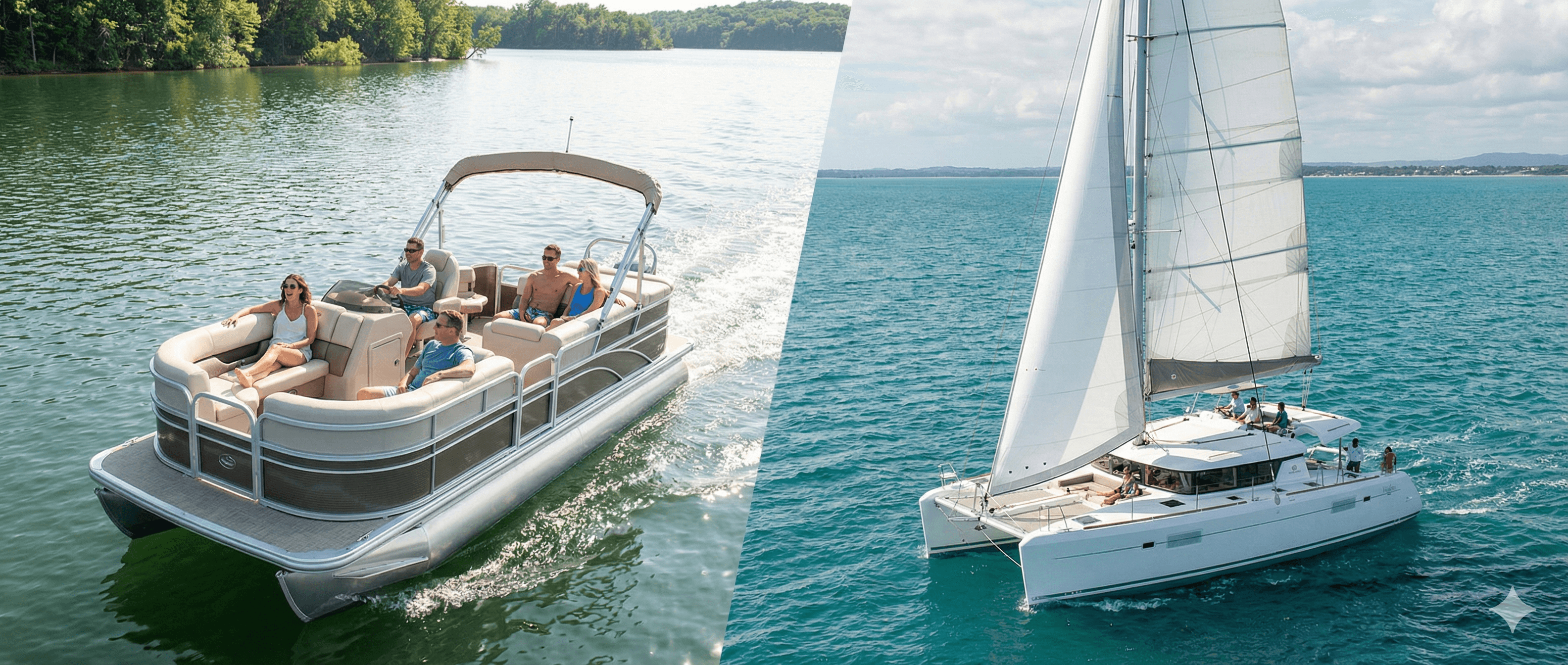
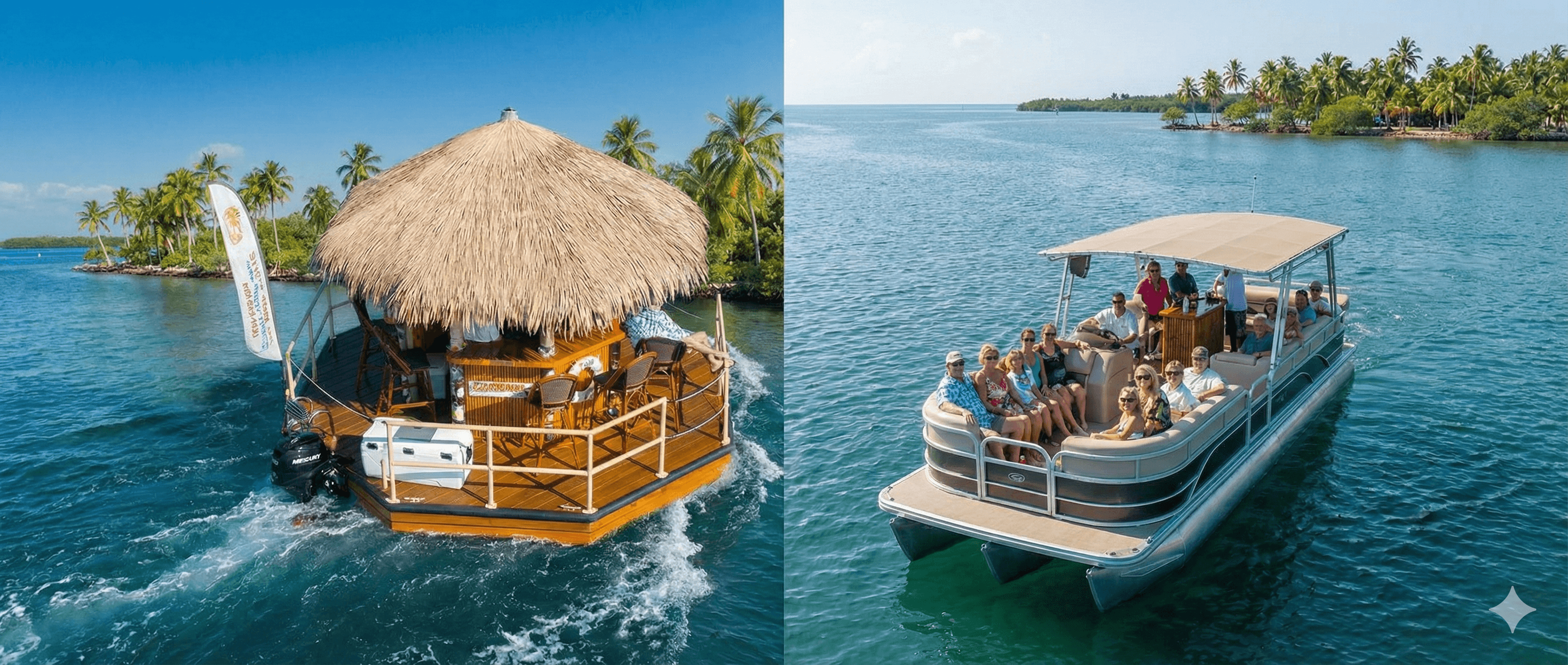
Pontoon tour boat: A standard multi-pontoon vessel (usually tritoon for commercial use) configured for tours. Think bench seating, a bimini top or hardtop, maybe a small bar area. Utilitarian, stable, and versatile.
Tiki boat: A pontoon-based vessel with a tiki hut-style structure, thatched roof, bar area, and a strong "floating bar" aesthetic. Built for the experience as much as the ride. Some have pedal stations (tiki bike boats), others are motor-powered.
Upfront Costs
Here's where your budget starts talking.
Pontoon Tour Boats
A new commercial-grade tritoon configured for tours (12-20 passengers) runs $40,000 to $90,000 depending on size, motor, and outfitting. Used ones in good shape go for $20,000 to $50,000.
These are available from multiple manufacturers, and parts are easy to source. You can also convert a standard recreational pontoon for commercial use, though you'll need to ensure USCG compliance.
Tiki Boats
New tiki boats from specialized manufacturers cost $60,000 to $120,000+. The custom fabrication, thatched roofing, bar buildout, and lighting systems push the price up.
Used tiki boats are harder to find because the market is newer, but when they do pop up, they go for $30,000 to $70,000. Supply is limited, so you may need to be patient or willing to travel to pick one up.
Cost advantage: Pontoon boat, especially if buying used.
Passenger Capacity and Layout
Pontoon
A 24-foot tritoon tour boat comfortably holds 12 to 16 passengers for a tour. Larger 28-foot models can handle 18 to 22. The open layout is flexible, and you can reconfigure seating for different tour types (sunset cruise vs. narrated nature tour vs. party cruise).
Tiki Boat
Most tiki boats seat 6 to 16 passengers depending on the model. The bar area and structural supports eat into usable space. Pedal-powered tiki boats typically max out at 12 passengers.
More passengers per trip means more revenue per trip, which is a significant operational advantage for the pontoon.
Capacity advantage: Pontoon boat.
Customer Appeal and Bookability
This is where things flip.
Pontoon
Pontoons are the reliable pickup truck of the marine tour world. They're comfortable, stable, and functional. But nobody posts a pontoon boat tour on Instagram with three fire emojis. They don't generate the kind of buzz that fills your calendar from social media alone.
Pontoon tours sell on the destination (dolphins, sunsets, nature) rather than the vehicle itself.
Tiki Boat
Tiki boats are Instagram bait. The thatched roof, the floating bar, the tropical music, the string lights at sunset. People book tiki boats because the boat IS the experience. Bachelor parties, birthday groups, corporate outings, and girls' trips specifically search for "tiki boat cruise" in tourist areas.
In markets where tiki boats are still relatively rare, the novelty factor alone can drive bookings. I've talked to operators who are booked solid 3 months out based almost entirely on social media visibility.
Bookability advantage: Tiki boat, and it's not close.
Revenue Potential
Let's run some real numbers.
Pontoon Tour (16 passengers)
- Price per person: $35 to $55
- Revenue per trip: $560 to $880
- Trips per day: 3 to 4
- Daily revenue: $1,680 to $3,520
Tiki Boat Tour (10 passengers)
- Price per group or per person: $50 to $85 per person, or $500 to $800 per private charter
- Revenue per trip: $500 to $850
- Trips per day: 3 to 4
- Daily revenue: $1,500 to $3,400
The pontoon has a slight edge on raw capacity, but tiki boats often command higher per-person pricing because of the perceived experience value. In practice, the revenue numbers end up surprisingly close.
Revenue advantage: Roughly even, with pontoons winning on volume and tiki boats winning on price per seat.
Maintenance and Durability
Pontoon
Pontoon boats are built to last and easy to maintain. Parts are standardized and available everywhere. Any marine mechanic can work on them. The aluminum structure is durable and relatively low-maintenance.
Commercial pontoons can easily run 10+ years with proper care. Many operators get 5,000+ hours out of them.
Tiki Boat
The thatched roof needs periodic replacement or repair. The bar area, lighting, and decorative elements require upkeep that a standard pontoon doesn't. Salt water is particularly harsh on the aesthetic elements.
The underlying pontoon platform is the same, but the superstructure adds complexity and cost to maintenance. Budget 20-30% more for annual maintenance on a tiki boat compared to a standard pontoon.
Maintenance advantage: Pontoon boat.
Regulatory Considerations
Both vessels need to meet USCG requirements for commercial passenger vessels (assuming you're carrying paying passengers). The key requirements are the same: safety equipment, captain's license, vessel inspection, and insurance.
One area where tiki boats can run into issues is stability testing. The higher center of gravity from the tiki structure means some models need additional pontoon width or ballast to meet stability requirements. Make sure any tiki boat you buy has passed a stability test for commercial passenger service.
Regulatory advantage: Pontoon boat (simpler, more predictable).
So Which One Should You Buy?
Here's my honest take:
Buy a pontoon if:
- You're running nature tours, dolphin cruises, or sunset cruises where the destination is the attraction
- You need maximum passenger capacity for the price
- You want lower maintenance costs and simpler operations
- Your market already has tiki boats and you need to compete on price or volume
Buy a tiki boat if:
- You're in a party-oriented market (Nashville, Austin, Destin, Key West)
- Your target demographic is groups celebrating something (parties, birthdays, bachelorettes)
- Social media visibility is a key part of your marketing strategy
- Your market doesn't have a tiki boat operator yet (first-mover advantage is real)
Or... buy both.
Some of the most successful operators I know run a mixed fleet. Pontoons for the weekday nature tours and family groups. Tiki boats for the weekend party bookings. Different boats for different segments, and a booking calendar that stays full.
Where to Find Them
Pontoon tour boats are readily available on the used market because the commercial fleet turns over regularly. Tiki boats are harder to find used, but they do show up, especially during the off-season when operators are making fleet decisions.
Browse boats and watercraft for sale on ListMyFleet, or check specific market pages to see what's available in your area.